
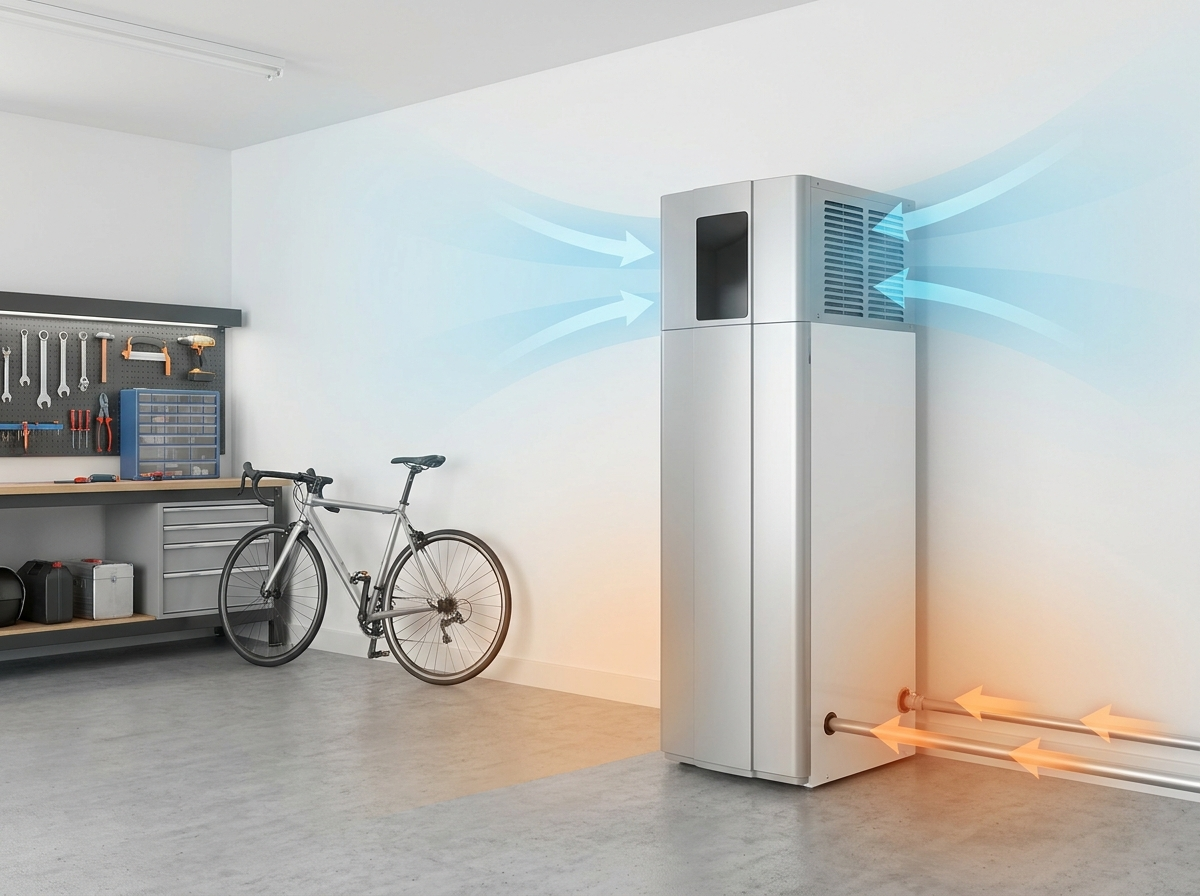
For a century, heating water at home meant one of two things: burn a fuel, usually natural gas, or run electricity through a resistance element. Both work, and both waste a surprising amount of energy. A newer option has quietly become one of the most efficient appliances you can put in a house, and most homeowners have never heard of it. It is the heat-pump water heater, and in California it comes with a stack of rebates that can make the switch surprisingly affordable. Here is how it works, why it matters, and what to weigh before you buy.
The Big Idea: Move Heat, Don’t Make It
A traditional electric water heater makes heat by forcing electricity through a metal element, the same way a space heater or a toaster does. That is straightforward but inefficient, because you get roughly one unit of heat for every unit of electricity you pay for. A heat-pump water heater takes a completely different approach: instead of generating heat, it moves heat. Using the same basic technology as a refrigerator or an air conditioner running in reverse, it pulls warmth out of the surrounding air and transfers it into the water tank. Because it is relocating existing heat rather than creating it from scratch, it can deliver two to four units of heat for every unit of electricity it uses. The U.S. Department of Energy notes that heat-pump water heaters can be significantly more energy efficient than conventional electric models, which is why they are also called hybrid electric water heaters.
What That Efficiency Means on Your Bill
Efficiency is an abstract word until it shows up as a number you pay. Because a heat-pump unit uses a fraction of the electricity of a standard electric water heater to deliver the same hot water, households that switch often see a meaningful drop in the portion of their utility bill devoted to water heating, which is typically one of the largest energy uses in a home after heating and cooling. The exact savings depend on your electricity rate, your hot-water usage, and your climate, but the direction is consistent: less energy in, same hot water out. Over the ten-to-fifteen-year life of the appliance, those monthly savings add up to a real number.
The Trade-Offs to Understand
No appliance is perfect, and a good plumber will walk you through the honest downsides. First, heat-pump water heaters cost more upfront than a basic tank, though rebates close much of that gap. Second, they need air to pull heat from, so they work best in a space with enough volume and reasonable ambient temperature, a garage, a utility room, or a basement rather than a tiny sealed closet. In a cold location they run less efficiently and may lean on a backup resistance element. Third, they move air and remove a little heat and humidity from the space around them, which is actually a bonus in a hot garage in the summer but something to consider in a conditioned room in winter. Fourth, they make a modest amount of noise, similar to a window air conditioner, so placement matters. Finally, the unit is taller than some tanks, so clearance should be checked. None of these are dealbreakers; they are simply factors that determine whether a given home is a good fit.
The California Rebate Landscape
This is where the math often tips decisively. California has aggressively promoted electric, high-efficiency water heating as part of its broader energy and climate goals, and heat-pump water heaters sit at the center of that push. Homeowners may be able to stack several forms of help: federal tax credits for qualifying energy-efficient equipment, statewide programs designed to incentivize heat-pump water heater adoption, and rebates offered by local utilities and water agencies. Because these programs change, have eligibility rules, and sometimes have limited funding, the smart move is to confirm what is currently available before you buy. A good installer stays current on which rebates apply and can often help with the paperwork. When several incentives stack, the net cost of a heat-pump water heater can come down close to, or even below, the cost of replacing a conventional unit.
Is It Right for Your Home?
A heat-pump water heater is an especially strong choice if you currently have an electric water heater, have a suitable installation space like a garage with enough air volume, plan to stay in the home long enough to enjoy the energy savings, and want to take advantage of the available rebates. If you have gas service and a tight mechanical closet, the picture is more nuanced, and converting may involve electrical work. As with tankless versus tank, the right answer comes from looking at your actual setup, your usage, and your goals, not from a one-size-fits-all rule.
The Bottom Line
Heat-pump water heaters represent a genuine shift in how homes make hot water: not by burning or brute-forcing energy, but by cleverly moving heat that already exists. For the right home, they deliver strong efficiency, lower operating costs, and, in California right now, a rebate environment that makes the upgrade far more accessible than most people assume. If you are already facing a water-heater replacement, it is worth asking whether this is the moment to move to the technology that is quickly becoming the standard.
A Note on Maintenance and Lifespan
Like any water heater, a heat-pump model rewards a little upkeep. Because it draws air across an evaporator, the air filter should be cleaned periodically so airflow stays strong and efficiency stays high, a simple task most homeowners can do themselves. The condensate the unit produces, a normal byproduct of pulling humidity from the air, needs a clear drain path, so it is worth checking that the condensate line stays unobstructed. And in our hard-water region, the same descaling and flushing logic that applies to any tank applies here: periodic maintenance keeps mineral sediment from building up and shortening the unit’s life. Treated well, a quality heat-pump water heater should deliver a decade or more of efficient service, and pairing it with sensible water-use habits multiplies the savings. When it is time for service, a plumber familiar with the technology can handle the filter, the condensate line, and the anode rod in a single visit.
Curious whether a heat-pump water heater fits your home and which rebates you qualify for? Plumbing Care Inc installs and services high-efficiency water heaters and can help you sort through the current incentives. Call (916) 510-8804 (Sacramento and Placer County) or (925) 255-6352 (Bay Area).
Sources consulted (paraphrased, not quoted): U.S. Department of Energy consumer guidance on heat-pump (hybrid electric) water heaters and efficiency; ENERGY STAR program information on qualifying water heaters; general information on federal energy-efficiency tax credits and California statewide and utility rebate programs. Rebate availability and eligibility change — confirm current programs before purchase.
Related Reading
- Tankless vs. Tank Water Heaters: Which Is Right?
- Drought-Smart Plumbing: Cut Water Use at Home
- Galvanized, Copper, or PEX: Identify Your Pipes
Considering a heat-pump water heater? Contact Plumbing Care Inc. to discuss your home’s hot-water needs and request a qualified evaluation. Mention PCI-BLOG-13007 when you call so our team can identify the post that brought you here.