
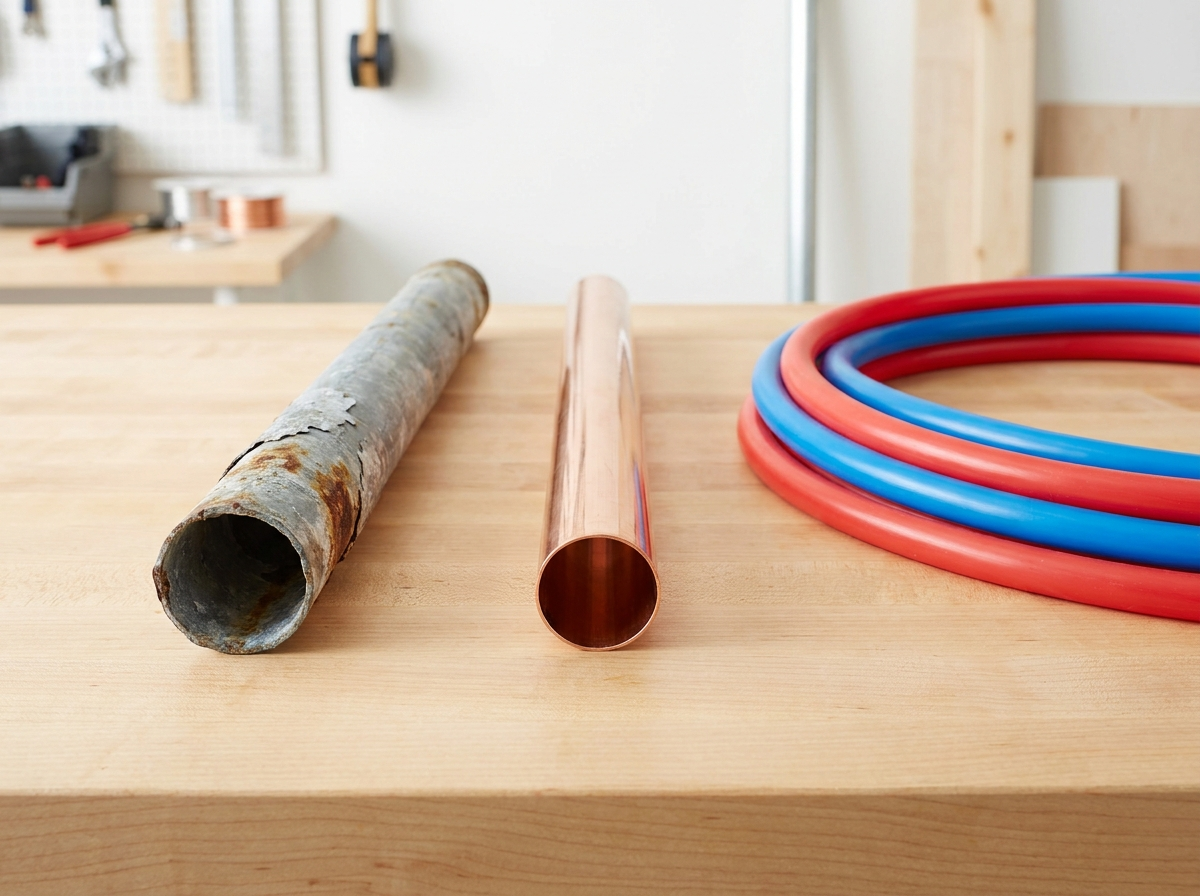
Behind the walls of every home is a network of pipes you almost never see, quietly carrying water to your taps and away from your drains. Most homeowners never think about what those pipes are made of, until something goes wrong, or until they are buying an older house and want to know what they are getting into. The material matters more than you might think. It affects water quality, the risk of leaks, how a repair is done, and how long the plumbing will last. This guide walks through the three materials you are most likely to find in a Northern California home, how to tell them apart, and what each one means for you.
Why Pipe Material Is Worth Knowing
Homes are essentially time capsules of the era they were built in. Walk through neighborhoods of different ages in the Sacramento and Bay areas and you can practically date the houses by what is behind the walls. Knowing your pipe material helps you anticipate problems, budget for eventual repiping, and make smart decisions when you renovate. It also helps you understand advice from a plumber, because the right repair for copper is different from the right repair for galvanized steel or PEX.
Galvanized Steel: The Aging Workhorse
Galvanized steel pipe, steel coated with a layer of zinc to resist corrosion, was the standard for water supply lines in homes built before roughly the 1960s. It was strong and, in its day, a real improvement. The problem is time. The protective zinc coating eventually wears away, and the exposed steel begins to corrode and rust from the inside out. As it does, mineral deposits and rust build up on the interior walls, slowly narrowing the passage the way plaque narrows an artery. The results are familiar in older homes: reduced water pressure, discolored or rusty-looking water, especially first thing in the morning, and eventually leaks. You can often identify galvanized pipe by its dull silver-gray color and by the fact that a magnet will stick to it. If your home was built before the 1960s and still has its original supply lines, there is a good chance some galvanized pipe remains, and it is generally near or past the end of its useful life.
Copper: The Trusted Standard
From roughly the mid-twentieth century onward, copper became the gold standard for residential water lines, and for good reason. It resists corrosion far better than galvanized steel, tolerates heat well, does not impart taste to the water, and has a long track record of reliable service. Copper is easy to identify by its distinctive reddish-brown or, when older, greenish patinated color, and a magnet will not stick to it. Copper is not invincible, however. In areas with aggressive or chemically unbalanced water, it can develop pinhole leaks over time through a process called pitted corrosion, and those tiny leaks are a common cause of the hidden slab leaks we see in the region. Copper is also more expensive than the plastic alternatives and requires soldered joints, which makes installation more labor-intensive. Still, for durability and proven performance, copper earned its long reign.
PEX: The Flexible Newcomer
The most significant change in residential plumbing in recent decades is PEX, short for cross-linked polyethylene. It is a flexible plastic tubing that has rapidly become the material of choice for new construction and repipes. PEX has real advantages. It is flexible, so it can snake through walls with fewer joints and fittings, which means fewer potential leak points. It resists scale and corrosion, which matters a great deal in a hard-water area like Sacramento. It tolerates freezing better than rigid pipe because it can expand slightly rather than bursting immediately. And it installs faster and typically costs less than copper. PEX is easy to spot because it is plastic and often color-coded, red for hot and blue for cold, though white and gray are also common. It is generally connected with crimp or push-fit fittings rather than solder. Because it is relatively new compared to copper’s decades of history, its very-long-term lifespan is still being established, but its performance so far has made it the dominant choice for modern plumbing.
A Quick Field Guide: How to Tell What You Have
You can often make a good guess yourself by looking at exposed pipe in a basement, garage, crawlspace, or under a sink. Dull gray metal that a magnet sticks to is likely galvanized steel. Reddish or brown metal that a magnet does not stick to is copper. Flexible plastic tubing, frequently red or blue, is PEX. Rigid white or cream plastic is usually PVC or CPVC, more common on drain lines or in specific applications. Keep in mind that many homes are a mix, especially if they have been partially repiped over the years, so you may find copper in one section and galvanized in another.
When to Think About Repiping
If your home still has original galvanized supply lines, declining pressure, rusty water, and recurring leaks are signs that repiping is worth considering, both to restore performance and to avoid the escalating cost of chasing failures. If you have copper and are seeing repeated pinhole leaks, that pattern also points toward a larger conversation rather than one more patch. In both cases, a whole-home repipe in modern materials often ends the cycle of repairs and protects the home for the long term. The best first step is simply to have a plumber assess what you have and its condition.
Not sure what is behind your walls, or dealing with low pressure, rusty water, or repeat leaks? Plumbing Care Inc can inspect your plumbing, identify the materials, and recommend the right repair or repipe for your home across the Sacramento and Bay areas. Call (916) 510-8804 (Sacramento and Placer County) or (925) 255-6352 (Bay Area).
Sources consulted (paraphrased, not quoted): general plumbing-industry and building references on galvanized steel, copper, and PEX piping and their properties; U.S. Geological Survey information on hard water and corrosion; standard guidance on residential repiping and pipe identification.
Related Reading
- Lead Pipes Through History
- Slab Leaks Explained: Catching Hidden Leaks Early
- The Hidden Life of Your Water Main
Unsure what type of pipe is in your home or whether it needs attention? Contact Plumbing Care Inc. to request a qualified plumbing evaluation. Mention PCI-BLOG-13009 when you call so our team can identify the post that brought you here.

2 comments on “Galvanized, Copper, PEX: How to Tell What Pipes Are in Your Walls”